

Narayana Health’s £188.8m acquisition of Practice Plus Group’s hospitals has put the Indian provider firmly in the spotlight. As it sets out its ambitions for the UK, founder Dr Devi Shetty and Practice Plus Group executive chair Jim Easton tell Maria Davies why scale, technology and a different approach to productivity could reshape both NHS and private care
When Dr Devi Shetty describes a single Narayana Health hospital in Bangalore performing 36 heart operations in a day, it has more to do with drawing a comparison than attracting admiration.
The figure represents roughly half the number performed across the whole of England on a typical day.
‘I’m not talking about how great we are,’ he tells HM. ‘I’m talking about what is possible.’
Following its acquisition of Practice Plus Group’s secondary care division (PPG) for £188.8m at the end of last year, Narayana chose the 29th floor of Guy’s Hospital to formally introduce itself to the UK market. The location was not selected just for the vista. Shetty trained at the hospital in the 1980s and, as private health insurers, clinicians and other stakeholders joined to admire dramatic views stretching far beyond the city, the message was clear: supporting the NHS is core to Narayana’s vision for its UK business.
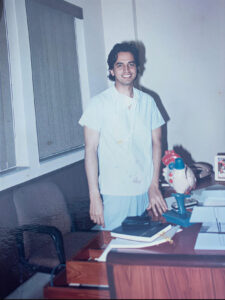
The NHS, says billionaire businessman and philanthropist Shetty, gave him financial stability early in his career as well as invaluable experience, which many years later contributed to his building of a healthcare business focused on universal access.
Founded by Shetty in 2000 to expand the provision of affordable, high quality cardiac care to India’s mass population, Narayana Health is now one of the country’s largest private hospital groups and performs 16% of all its cardiac surgery. It operates more than 30 hospitals and clinics, including three specialising in cardiac care, and treats an astonishing 4.2 million patients a year across all specialties.
Yet while medical systems around the globe creak under the challenges of population growth, aging demographics and medical inflation, Shetty counters the consensus that this by necessity equals more expensive healthcare. Instead, he says that by harnessing technology, the cost of healthcare delivery can actually be reduced significantly at the same time as improving access.
‘I’m convinced that in my lifetime, everyone living on this planet will have access to healthcare with dignity, and it’s not going to take, hopefully, more than five to ten years,’ he says. ‘I went back to India 36 years ago and I did the first bypass grafting in Calcutta. The patient paid £1,500. Today, we are charging the same amount of money, £1,500.’
How has Narayana achieved this? First and foremost, he says ‘all of us believe that if a solution is not affordable, it’s not a solution’.
It is this thinking that Shetty believes has the power to make the company’s entry into the UK market transformative. It also goes some way to explaining why its acquisition of Practice Plus Group’s hospitals and surgical centres is being watched with fascination – both among competitors and stakeholders in the UK and would-be market entrants in India.
all of us believe that if a solution is not affordable, it’s not a solution
PPG might look like a minnow compared to its new owner when it comes to scale, but its acquisition is being framed more in terms of new partnership than new ownership.
Narayana Health colleagues are joining PPG teams in IT and operations, while UK staff are visiting India to observe delivery models first-hand. Shetty’s son Dr Anesh Shetty has spent significant time in the UK, sitting on the PPG board and acting as a bridge between the organisations.
Shetty, alongside Anesh and eldest son Viren, both of whom hold senior roles within the
business, was joined at the UK launch by the PPG leadership, including new CEO Ross Dowsett and former CEO Jim Easton. Easton remains executive chair of the remaining PPG businesses and takes on a non-executive leadership role under Narayana Health. The message is one of unity: a family-led business joined around a shared aim of delivering safe, accessible and affordable healthcare.
‘We are going to try to build together the most productive, highly efficient, high quality healthcare provider in this country, serving the government’s patients through the NHS, and making that offer available more widely to private patients,’ says Easton.
PPG, which cut its teeth in the business of NHS independent sector treatment centres, is already well known for running a tight ship. Its private patient business Wellsoon officially launched in 2023 and was dubbed by Easton as a ‘market disrupter’ offering prices for orthopaedics as much as 30% below its competitors. The company’s overall strategy of focusing on NHS electives while building out its self-pay and insured work remains largely unchanged, but what does shift is the tempo.
PPG has spent the past decade positioning itself as one of the most cost-efficient providers in the UK market, using mostly employed clinicians to deliver high volume, quality care to the NHS at scale. But Narayana believes it can make the company between 30% and 50% more efficient and exposure to its operating model, says Easton, has already revealed an ‘order of magnitude difference’.
‘We believe we’re pretty efficient by UK standards, but then your eyes open to another whole layer of what is possible,’ says Easton. ‘And of course, when you achieve that, you can share that benefit back with the customer in terms of better price points and more access to care. And that mission is very powerful.’
Boosting efficiency
So, how has Narayana managed to achieve this degree of efficiency? Reducing healthcare costs without compromising quality, says Shetty, is not possible without large-scale digital adoption. Underpinning everything Narayana has accomplished is its proprietary digital platform, Athma: something it plans to roll out across PPG over the coming months.
The gains, says Shetty, are twofold: ‘It will dramatically increase productivity of doctors and nurses and it will make healthcare safer for the patient.’
We believe we’re pretty efficient by UK standards, but then your eyes open to another whole layer of what is possible
Athma is not an EMR. It’s an advanced digital healthcare platform similar to iOS and Android that can effectively run multiple applications, including WhatsApp style chat, advanced patient monitoring, AI-driven patient records and detailed reporting.
In a recent addition to the platform, Narayana has worked with Honeywell to develop a patient monitoring system that provides continuous information on patients’ vitals, including ECG with analytics, pulse, blood pressure, saturation, temperature. The data is sent directly to Athma and accessed by nurses from a central monitor.
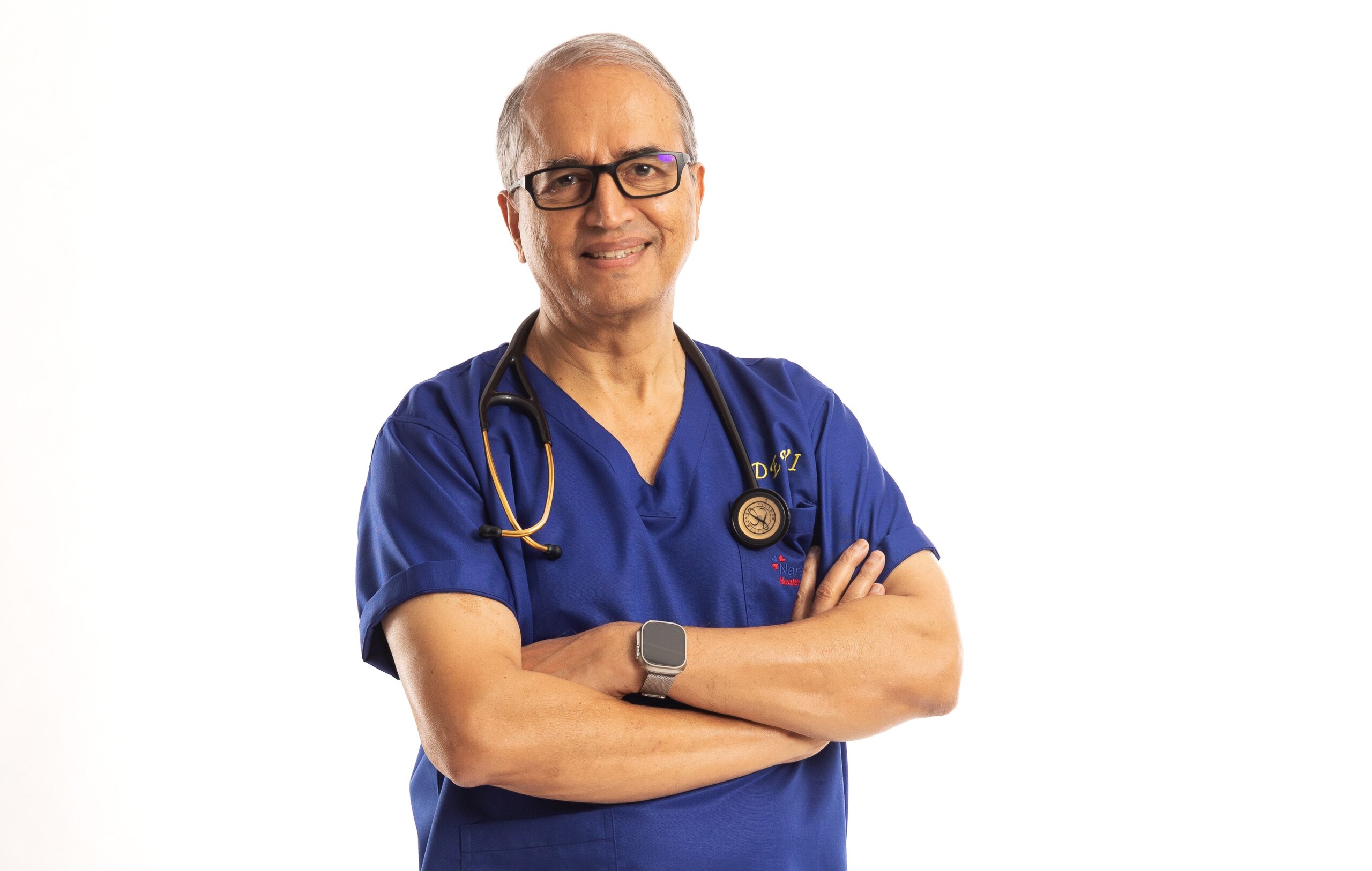
There has been a profusion of digital solutions in healthcare over the last decade but according to Shetty, they are too often being used in silos, with the main aim to reduce costs for insurers rather than improve outcomes for patients.
‘Unless these apps talk to each other, they are of no use,’ he says. ‘It is like everyone is building fancy vehicles, but no one has built the road. We decided 20 years ago to build the road and that is Athma.’
Today, Narayana has more than 250 tech professionals working within its healthcare business which Easton says means a ‘completely different level of capability’ for PPG.
‘Although we have many strengths as a company, if we have a weakness it’s that we’ve never been able to invest in the kind of tech revolution to drive care,’ says Easton. ‘The platforms that [Narayana] has built are very compelling and the ability to accelerate is really exciting.’
Alongside digital transformation, Narayana’s investment will extend to PPG’s physical portfolio. The business plans to replace two sites over the next two years, moving to purpose built facilities that will enable the kind of efficiency gains targeted. Easton says it is also ‘actively looking for partners’ to develop sites in new geographies in the north and east of England, and potentially Scotland, where it doesn’t currently have a strong presence.
However, for the time being at least, PPG’s plans for physical expansion are modest in comparison to its tech ambitions.
‘Because of the focus on efficiency and high productivity alongside quality, we don’t think a national network is 45 hospitals,’ says Easton. ‘We think you can reach 95% of people within an hour with 15 hospitals in this country and, in return for maybe an extra 30 minutes’ travel, give patients £3,000 or £4,000 off the cost of a hip replacement.’
New specialties could also be on the cards and Easton hints that with an international figure in specialist surgery at the helm, they will look beyond the confines of where it has focused to date.
‘In this country, people need cardiac surgery, they need cancer treatment and we are being encouraged to think about what more we could offer, but not to do it in the old fashioned, expensive way,’ says Easton.
Value, he adds, is one of the reasons why such a high percentage of cardiac surgery in India goes through Narayana hospitals. ‘The price points are extraordinary when you think in the US it would cost $100,000 for that surgery,’ he says. ‘That level of highly effective efficiencies is astonishing for people working in European and US markets.’
Quality remains the company’s prime concern, but if it can substantially lower the price of existing specialties including orthopaedics, ophthalmology and general surgery – and in time do the same for cardiac and cancer care – that would be a gamechanger in the UK market.
However, perhaps one of the more unusual elements of Narayana Health’s UK entry is its attitude towards competition. Shetty says the organisation does not regard other hospitals as rivals in India and has offered them its digital tools at a price they can afford, and sometimes at no cost.
That approach, he suggests, could be replicated in the UK.
‘We are very clear that we want to touch as many lives as possible, directly or indirectly. If every hospital in Britain uses our digital platform, we will be the happiest people,’ says Shetty. ‘We may not earn any money. That doesn’t matter.’
Easton qualifies that this does not mean that PPG will take its eye off commercial success but, he says, the company’s competitors already recognise that Narayana is a very different kind of market entry.
‘It’s not simply an investor looking for returns, but someone who has a long term vision for what’s possible in healthcare in this country,’ he adds.
Working with the NHS
The NHS is very much at the heart of that vision. Easton says PPG will continue to grow its private patient offering, but that fundamentally ‘it always has been and always will remain a provider for whom the NHS is core’.
Asked what attracted Narayana to the UK healthcare market, Shetty is unequivocal: the NHS.
‘I’m optimistic that everyone will have access to safe, accessible, affordable healthcare. That’s our mission and main purpose,’ says Shetty. ‘A great opportunity, we believe, is that England is one country which can dramatically transform its healthcare in a very short period of time, predominantly because everything required for a massive transformation is already there, and we want to see how we can partner with the NHS in making it happen.’
Whether Shetty and his team can rapidly reshape a system often characterised as slow-moving remains to be seen. He has made clear there are no guarantees of success, but nor does scepticism appear to have dampened his ambition. For now, he acknowledges that the business will be closely scrutinised, both in India and in the UK.
‘Everyone is watching us,’ he says. ‘If we do well, others will follow.’
 ©2026 All rights reserved LaingBuisson