
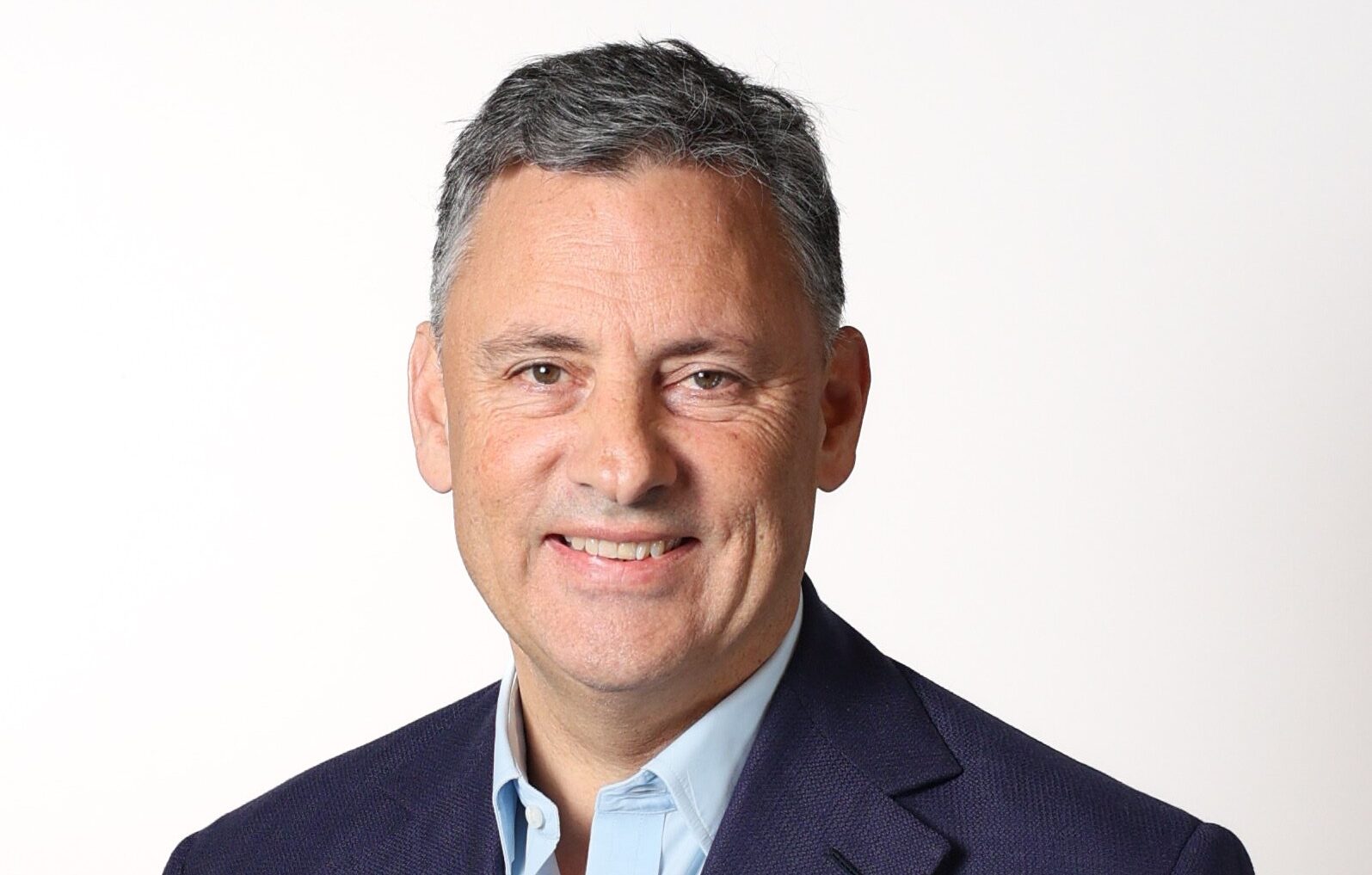
The independent neurodiversity sector has expanded rapidly in recent years. Maria Davies speaks to Clinical Partners founder and CEO Barny Guthrie about scaling the business amid soaring referral volumes, growing scrutiny and a mental health system struggling to keep pace with demand
Clinical Partners founder and CEO Barny Guthrie is remarkably candid about his own experience with mental health when we meet to discuss the company’s foundations and its rapid growth trajectory during the last seven years.
Asked how he came to set up the business, he does not begin with market opportunities or service gaps, but with his own childhood.
‘My early life experience was very challenging, and I had a lot of contact with mental health services of various kinds, which were extremely helpful to me,’ he tells HM.
School was problematic and Guthrie spent time on a children’s psychiatric ward. But later came Sandhurst, a career as an Army officer and business school.
‘If you put those two things together, it is the perfect training for my job, because I love mental healthcare more than anything else in the world, and I’m also really into business and really organised,’ he says.
That combination of personal experience and operational focus has shaped Clinical Partners. What began nearly 16 years ago as a small outpatient mental health provider has become one of the largest independent providers of neurodevelopmental services in the UK, fuelled largely by explosive demand for ADHD and autism assessments.
The company’s original vision, however, was much broader.
‘We started Clinical Partners because it felt like it was extremely hard for people to find quality-assured mental healthcare in the UK,’ Guthrie says. ‘When somebody you love is in distress and you want to find them effective help and you want it to be right first time, that’s an extremely important choice. Most people, when they’re looking for help for someone they love or for themselves, they don’t really know what good looks like. They don’t really know what they’re buying.’
In its early years, Clinical Partners grew steadily through self-pay outpatient psychiatry, psychology and psychotherapy services. Then, around 2018, the NHS began referring relatively small numbers of neurodevelopmental assessments to the company.
‘The NHS started sending us manageable volumes of contracted neurodiversity-related work’ Guthrie says.
The introduction of right to choose pathways accelerated that growth dramatically.
‘When the NHS launched right to choose, suddenly there was this explosion of demand. We went from working for six ICBs to working for 42 ICBs.’
The scale and speed of growth forced the business to evolve quickly. Guthrie describes the operational challenge with a mixture of pride and disbelief.
‘We hire a lot of people nowadays with job titles where, when I hear them, I can’t even guess what they do, because they’re all so clever, their roles are so complicated and they’re so specialised,’ he says.
One of the company’s most important appointments was chief medical officer Dr Alice Parshall, formerly medical director at Central and North West London NHS Foundation Trust and clinical director in neuropsychiatry and medical director at St Andrews Healthcare.
Another was chief operating officer David Scott, who was previously operations director at Deliveroo.
‘David knows how to do a tech-enabled scale-up,’ Guthrie says.
The company now employs around 500 staff and works with approximately 500 self-employed clinicians across a broad multidisciplinary workforce including psychiatrists, psychologists, nurses, pharmacists, paediatricians, speech and language therapists and occupational therapists.
The rapid expansion of the neurodevelopmental market has also brought growing scrutiny, particularly around quality and governance standards among newer providers.
Guthrie believes concerns about variable quality are legitimate, although he draws a distinction between established operators and some market entrants.
‘One of the concerns particularly amongst NHS leadership is about variable quality in the independent sector,’ he says. ‘I don’t think that’s much of an issue amongst the mature scale providers, but there are an awful lot of startups dotted around who may not have had time to build out quality assurance and governance to the same standard.’
Demand drivers
He believes further work from NHS England on service specifications and quality standards would help stabilise the sector. However, while much of the media debate has centred around independent sector providers’ profiting from rising rates of diagnosis, Guthrie is clear that the underlying demand is real.
‘I think it’s really obvious,’ he says, when asked what is driving rising referrals.
He points to the work of the ADHD taskforce led by Professor Anita Thapar, alongside broader analysis from Professor Sir Simon Wessely and Professor Peter Fonagy.
‘The ADHD Task Force said that ADHD is massively underdiagnosed and undertreated in this country, and there is solid evidence to support that,’ Guthrie says. ‘That doesn’t mean that at the same time, there can also be individuals for whom a diagnosis is questionable. If you are talking about under-diagnosis versus over-diagnosis, the evidence says massively that there is under-diagnosis, but that doesn’t mean that there can’t be other things going on at the same time.’
However, he says, one of the key drivers of demand came with the opening up of neurodiversity assessment pathways to NHS Right to Choose in 2018.
‘If you went back to 2019 and looked at the 42 ICBs, you’d see they all had waitlists of between one and 10 years,’ he says.
At the same time, he acknowledges broader societal and cultural shifts have also influenced referral patterns.
‘Twenty years ago, for example, autism was probably only being diagnosed in its more severe presentations,’ he says. ‘I think nowadays, people with less acute difficulties do meet a diagnostic threshold.’
That does not mean Guthrie dismisses concerns around medicalisation altogether.
‘The folks who are sceptical about this rise say normal human distress is being medicalised,’ he says. ‘At the margins, there may be some element of that. But I don’t think that’s the core of what’s going on.’
Managing demand
However, he acknowledges that the NHS is facing a population-level challenge alongside finite financial resources.
‘My sympathies are entirely with commissioners who are responsible for managing and balancing budgets, because this is an extremely challenging problem,’ he says.
The financial pressure created by soaring demand has led ICBs to introduce activity management plans, including capped referrals and waiting list controls across parts of England. This has meant Clinical Partners has had to adapt to increasingly fragmented commissioning arrangements, with different ICBs operating under different models to manage activity.
‘We have a large waitlist on any given day, and that’s made up of patients from 36 ICBs, and all of them are essentially getting a different service,’ Guthrie says. ‘Some of them are fully funded, some of them may be funded some of the time, some of them are not funded.’
Still, Guthrie remains sympathetic to commissioners’ position.
‘Fundamentally, they are trying to look after their populations, and they are trying to share finite resources across a large amount of demand,’ he says. ‘The imposition of tariffs is a very sensible first step. I don’t think they’ve got the levels of the tariffs exactly right on every service line, but overall it’s a good first step.’
However, despite growing waiting lists, Guthrie does not believe large numbers of NHS patients are moving into private care.
‘If people are unable to access NHS services, then a percentage of those people will go private, but I think that percentage is probably quite low’ he says.
Sharp rises in demand have brought new operators into the sector, attracting investor appetite in the process. But Guthrie says current uncertainty around NHS funding models, tariffs and commissioning approaches are making buyers increasingly cautious.
Consolidation across the market is inevitable, Guthrie believes. Clinical Partners is also pursuing growth opportunities itself, though its acquisition strategy is focused more broadly on mental healthcare than neurodevelopmental services specifically.
Alongside acquisitions, Guthrie says Clinical Partners is investing heavily in outcomes measurement and quality improvement.
‘What the team are really focused on is quality improvement, continuous improvement, refining and improving the services that we offer,’ he says.
The company has joined the Child Outcomes Research Consortium and works with the Erasmus School of Health Policy and Management in Rotterdam on quality-of-life measurement.
‘We want to be able to evidence the value that we are adding to the system in terms of improved quality of life and quality-adjusted life years.’
For Guthrie, the long-term ambition remains broader than neurodevelopmental services alone.
‘Fundamentally, I’m interested in delivering evidence-based mental healthcare to distressed populations where funding is available to treat them,’ he says.
And despite the operational complexity, political scrutiny and financial uncertainty surrounding the market, he remains optimistic.
‘The country has a challenge,’ Guthrie says. ‘Our approach is that we’re here to help.’
 ©2026 All rights reserved LaingBuisson