
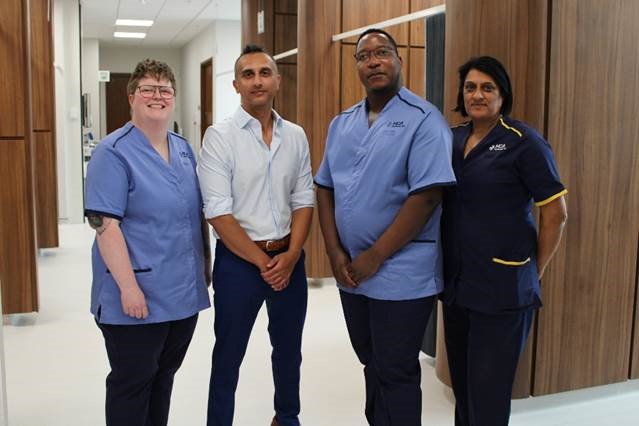
HCA Healthcare UK has introduced bispecific antibody therapy for patients with extensive stage small cell lung cancer (ES-SCLC) at its Harborne Hospital in Birmingham, making it the first facility in the West Midlands to deliver the treatment.
HCA was one of the first providers to offer bispecific therapy for blood cancers in 2023, and the new lung cancer treatment represents the first bispecific therapy of its kind for a solid tumour available through the network.
The therapy, which is not currently available on the NHS, is offered to patients whose disease has progressed after two or more lines of treatment. It uses manufactured antibodies that bind to proteins on both cancer cells and T-cells. This unique mechanism allows T-cells to come into close contact with cancer cells, enabling them to recognise and destroy them more effectively than traditional treatments.
The treatment is available across HCA UK’s Leaders in Oncology Care (LOC) network through private medical insurance and self-pay options. The first patient was treated at The Harborne Hospital under the care of consultant oncologist Dr Shobhit Baijal.
‘This milestone represents a significant breakthrough in our ability to treat patients with extensive stage small cell lung cancer and we’re proud to have treated HCA UK’s first patient with the therapy here at The Harborne Hospital,’ said Baijal. ‘Bispecific T cell engager therapy represents the next generation of immunotherapy, building on the success of monoclonal antibodies and harnessing the natural defences of the immune system in a more targeted way than ever before. As we continue to advance in the field of immunotherapy and cellular therapies, we are fundamentally changing how we can target cancer cells, providing our patients with innovative treatment options that were not available just a few years ago.’
 ©2026 All rights reserved LaingBuisson


 at its Harborne Hospital in Birmingham, making it the first facility in the West Midlands to deliver the treatment.)