
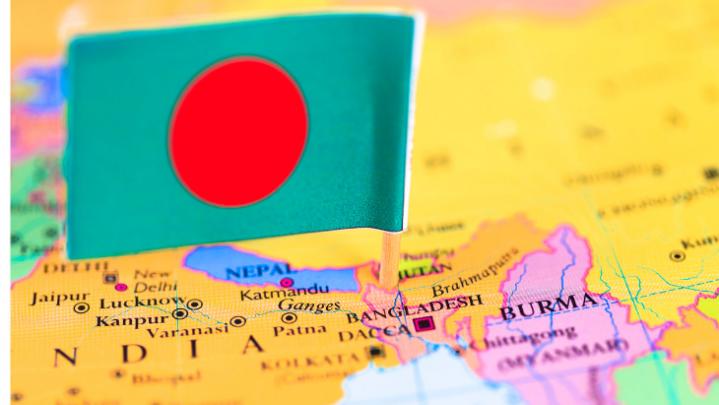
One of the biggest unsung areas of medical tourism is taking the hospital to the patient, rather than taking the medical tourist to the hospital. USA hospitals to Europe, and UK and US hospitals to the Middle East and Africa get the headline news, but cross-border activities of Asian hospital groups are also happening, notably with investment in Bangladesh, says IMTJ analyst Ian Youngman.
The growing number of people going for medical treatment has encouraged international hospital chains to work with local partners to expand their businesses and bring their high quality services to other Asian countries.
At least seven local firms, in collaboration with hospital chains, such as Apollo, Evercare, Green Hospital Supply of Japan, and Thonburi Healthcare Group of Thailand, have already begun the process to set up healthcare facilities in Bangladesh.
Apollo Imperial Hospital, a 375-bed Apollo hospital will open in Chattogram in 2023 in a partnership between Apollo and local company Imperial Hospital Limited. Apollo has branches in 25 countries including the UK, Mauritius, Egypt, Barbados, Vietnam, Fiji Island, Bahrain, and Nigeria.
Japanese investment will set up Madina Aichi Dental Services in collaboration with the Update Dental College Hospital in Dhaka by January 2023.
Ship Achi Cancer Hospital opens in Purbachal, a new town project in Bangladesh, in 2025 as a partnership between Green Hospital Supply of Japan and Bangladesh’s Aichi Medical Group. US-Bangla Group will also open a hospital in Dhaka, to be located at Purbachal. Talks are being held with several more chain hospitals in India, but no final agreement has been reached yet.
Ship International has opened in Turag, Dhaka as a partnership between Green Hospital Supply and Aichi Medical Group.
Thonburi Healthcare Group based in Thailand will help to install information technology and operational systems at a Bangladesh hospital with 500 beds.
The Evercare Group has just opened Evercare Hospital Chattogram the first-ever multispecialty tertiary care hospital in the port city.
Such joint venture initiatives will add 3,000 more beds to the existing 95,000 beds in private hospitals.
In a few more years, Green Hospital Supply in partnership with Jica and Aichi Medical Group, has plans for a 1,000-bed hospital Japan International Cancer Hospital and Research Centre in Purbachal, Dhaka. It hopes by 2026 it will offer services that are either not available or limited in the country such as proton therapy that currently only exists in Singapore among Asian countries.
Reversing outbound medical travel flow from Bangladesh
Annually, thousands of Bangladeshis go abroad for medical treatment. India tops the list of medical tourism destinations followed by Singapore, Thailand, Malaysia, and the UAE.
According to the Bangladesh Bank, Bangladeshis spent US$2.2 million in FY19, US$1.6 million in FY20, US$1.6 million in FY21, and US$0.5 million during the July-September period of the current FY23 for treatment abroad.
Around 700,000 Bangladeshis travel overseas for medical care each year. 240,000 go to India and 50,000 go to Thailand.
Local partners will mainly take logistics and technical support from foreign hospitals to increase their capacity to provide patients with quality services.
One suggestion is that there is no need to build hospitals as countries can just fly in doctors. But bringing physicians from abroad to provide health services in Bangladesh is costly, and it is not easy for some patients to travel abroad. Local partnership hospitals will help these patients.
Building healthcare quality in Bangladesh
In Bangladesh, more than 65% of patients receive healthcare services in private facilities, but the quality of the private hospitals is questionable. The health directorate frequently conducts drives against unlicensed hospitals, who are known to trick patients out of money on the promise of treatments.
The country believes that when foreign hospital chains come to Bangladesh, patients will get higher quality services.
The Institute of Health Economics at Dhaka University explains, “If the big private hospitals of different countries open their branches in Bangladesh, huge investments will be there, technology transfer will take place, doctors and nurses of our country will have job opportunities. Patients will be able to receive treatment in a better environment. Critical patients who cannot go abroad will be able to get treatment in these hospitals.”
The institute argues “There is some doubt whether these private hospital branches will be able to play much of a role in reducing outbound travel for healthcare right away because most of the patients of the country go abroad for treatment as there is a crisis of trust in local facilities. Patients go abroad for various reasons including rude behaviour of doctors, dissatisfaction with the quality of tests, and high cost of treatment in the country. If these chain hospitals gain the trust of the patients, maybe foreign trips will decrease.”
There is an argument that there is a need for the government to encourage companies to establish foreign chain hospitals outside Dhaka instead of concentrating in the capital.
The Bangladesh Investment Development Authority is promoting inward investment but warns that countries such as China, Saudi Arabia and Turkey had shown their interest in building hospitals in Bangladesh a few years ago but there is no visible progress yet.






 ©2026 All rights reserved LaingBuisson