
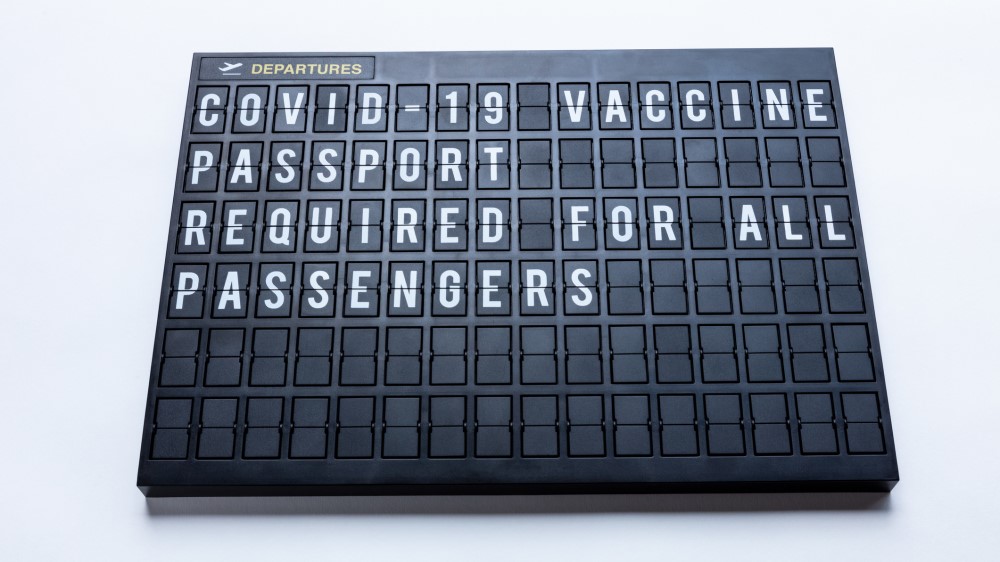
To revive travel and tourism in Europe, the European Parliament and the member states have agreed on EU Digital COVID-19 Certificates (EUDCC). The goal is to have it available to citizens in all EU countries by July 1. Ian Youngman explains the origins and detail behind the certificate and its impact for medical travel.
Previously known as the Digital Green Certificate, the EUDCC travel pass will help safe and free movement by proving that a person has either been vaccinated against COVID-19, had a negative test, or has recovered from the virus.
Are we waiting for legislation?
The European Parliament and Council have both agreed it and will now look to formalise the proposed legislation.
The European Council has said it welcomes the agreement reached on the EUDCC and is calling for its rapid implementation. As a next step, with a view to facilitating free movement in the EU, the Council wants a revision by mid-June of the Council Recommendation on travel within the EU.
The EUDCC will be formalised by passing an EU regulation, which is a binding legislative act requiring it to be applied in every EU country. There are, however, get out clauses.
Once the legislation has taken place, the regulations will be published in the Official Journal of the EU and will apply from 1 July.
This is expected to mark a watershed moment in the progress of opening up the EU post-pandemic.
What is the new certificate?
The EUDCC will allow for travel restrictions to lift across all 27 member states and will also be available for specific non-EU countries.
It will consist of information about an individual’s vaccination, test and/or recovery status in regards to COVID-19. Formulated as a QR code, the person travelling can choose to carry either a digital or paper-based certificate.
Where is it being trialled now?
While the goal is to have all EU member states implement the technology and make it available to citizens and residents by July 1, the following countries have already connected to the platform and started to issue digital certificates:
- Bulgaria
- Croatia
- Czech Republic
- Denmark
- Germany (a few regions only)
- Greece
- Poland
Additional countries will start issuing the EUDCC in the coming days and weeks, according to the European Commission. A regularly updated list covering the 27 EU countries plus Iceland, Liechtenstein, Norway and Switzerland, identifying who are issuing the certificates is available on the EUDCC website.
What technology is being used?
The European Union is using a cloud-based system established by tech providers T-Systems and SAP and hosted at the European Commission’s data centre in Luxembourg. It allows those on the platform to verify the digital information contained in the certificates’ QR codes while protecting personal data. The QR codes and the information they contain will be accessible through apps established by each individual country.
Twenty-two European countries, including Iceland and Norway, have already tested the technology. Member States have agreed on a common design that can be used for the electronic and paper versions to facilitate recognition.
When can medical tourists get one?
This will depend on the country where the patient comes from.
The regulation will come into force on July 1 and will have a six-week phasing-in period for any member country that needs more time. Also, for a period of six weeks, citizens whose certificates were issued before July 1 will be able to travel within the EU using those certificates. National certificates in other formats will be accepted during the phasing-in period.
However, the European Commission says that the system would be ready at an EU level much earlier than that so countries that are ready can start their domestic rollouts before then.
Do people have to pay?
The EUDCC will be free of charge. People should be wary of scam sites that promise to speed up the process for a fee.
Which vaccines are recognised?
All COVID-19 vaccines authorised by the European Medicines Agency will be recognised by the EUDCC. These include:
- Pfizer/BioNTech
- Moderna
- Oxford/AstraZeneca
- Johnson & Johnson
EU countries are also free to decide for themselves whether to accept other vaccines. They can also decide whether they accept a vaccination certificate after one dose or after a full vaccination cycle has been completed.
Are unvaccinated medical tourists banned from travelling?
No, as the EU has stressed that the new certificate will not become a pre-condition to free movement across the bloc; rather, it will facilitate the fundamental right.
There is no discrimination against individuals who are not vaccinated. Persons who are not vaccinated must be able to continue to exercise their free movement rights, where necessary subject to limitations such as testing or quarantine/self-isolation.
Which tests will be accepted?
Only PCR and rapid antigen tests will be accepted as proof of a negative test result, and only PCR tests will be accepted as proof of recovery. Rapid antigen tests, serological tests or other validated methods might be accepted at a later stage, if scientific evidence becomes available.
Self-tests are not recognised.
What about EUDCC use beyond EU member states?
The EU is open to the EUDCC being implemented in EEA countries (Iceland, Liechtenstein, Norway), as well as Switzerland.
Norway and Switzerland have pledged to create their own vaccine certificates to be compatible with the EU.
Iceland already allows entry to vaccinated EU tourists.
No longer a EU country, the UK has yet to reach an agreement with the EU on the EUDCC. Individual EU countries heavily dependent on UK tourists may however do individual deals.
The UK is currently rolling out its own vaccine certificates through its National Health Service. It is also operating a traffic light system (red, amber and green) for international arrivals, but this is causing confusion. Travellers from countries on the red list can only enter if they are UK or Irish nationals, or if they have UK residency status. Amber countries require a COVID test to be taken before travelling, 10 days of quarantine upon arrival, and two more COVID tests to be taken on day two and eight after arrival. Green list countries require a COVID test taken before and after arrival in the UK. British citizens are not banned from travelling to red or amber countries.
What about inbound travel to the EU?
Several EU countries have opened but rules vary between vaccinated and unvaccinated travellers, between countries and between the various information sites as countries struggle to keep them up to date. Border officials and airlines may impose their own version of the rules.
Medical travellers to the EU, especially for complex care treatment, include Americans and citizens from Gulf countries. Vaccinated Americans are allowed to travel abroad but the USA has no plans to launch a national digital passport. UAE leaders have also been pushing EU countries to allow residents to enter the EU soon, even if this only applies to those who have been fully vaccinated.
The EU wants to open to US travellers from July but the mechanics for doing this are confused. The EU has not yet said what kind of vaccine documentation or verification will be required for entry and whether or not it will be a digital document or if a paper certificate will suffice.
Many individual EU countries have already opened to vaccinated Americans and Canadians. As long as passengers are fully vaccinated, they can enter without need to quarantine, but rules vary greatly between countries and for ease of travel the USA may need to bring in a digital certificate. For example, arriving in Spain travellers will need to physically provide their vaccination certificates, and in France they still need a negative PCR test.
Fully vaccinated Americans are currently allowed into:
- Bulgaria
- Croatia
- Cyprus
- Denmark
- Estonia
- France
- Georgia
- Greece
- Iceland
- Montenegro
- Spain
From July 19 fully vaccinated American travellers can visit Ireland without quarantine or pre-departure test.
There are no dates to allow UAE residents in across the EU. Countries allowing in fully vaccinated travellers from the UAE include:
- Bulgaria
- Croatia
- Cyprus
- Estonia
- Georgia
- Greece
- Iceland
- Montenegro
Will the pass be secure?
The QR code contains a digital signature that will come from an issuing body, which could be a hospital, test centre or health authority. Each body has its own unique digital signature key stored in a secure database in each country.
The European Commission has built a gateway where all certificate signatures can be verified across the EU. The personal data of the certificate holder does not pass through the gateway, as this is not necessary to verify the digital signature.
The European Commission has helped Member States to develop national software and apps to issue, store and verify certificates and supported them in the necessary tests to on-board the gateway.
For how long is the certificate valid?
Validity will depend on how relevant the certificates are at any given time, as well as scientific evidence and national rules across each member state.
The EUDCC is not designed to be permanent, and the EU claims that it is strictly linked with the pandemic. When the World Health Organisation (WHO) declares the end of the public health emergency, it is anticipated that the certificate system will also be suspended. It could be reactivated in a case where the WHO declares another public health emergency. It is possible some countries may want to make the certificate permanent.
Will all travel restrictions be removed?
No, as it remains up to national governments to decide whether travellers with a certificate have to quarantine or get tested.
The EU says that EU countries should refrain from imposing additional travel restrictions, such as testing or quarantine, unless they are proportionate and necessary to safeguard public health.
If states decide to introduce travel restrictions, they must inform the other member countries and the Commission, if possible 48 hours in advance. They must clarify the reasons for such restrictions, their scope and the start date and duration. This information should be published 24 hours before the measures come into effect.
In reality, a country can choose to ignore these rules, as the European Commission has few powers enforce them.
How will it affect medical and health tourism?
Just because people are able to travel across Europe using a new system does not mean they will. And just because a country can accept health and medical tourists does not mean it will do so, or actively promote the sector.
Some countries will be very wary of promoting medical tourism while threats of new COVID variants or a next wave exist.
Most countries are still busy vaccinating their citizens, and it is still unknown how long vaccinations last before any top-up is needed and whether such top-ups are offered to all or just to the most vulnerable categories.
State and private hospitals are expected to have an 18- month backlog of normal surgery and cancer treatment that was delayed during the pandemic, so it may be late 2022 before normal service resumes.
And there remains the million dollar question for the medical travel industry: how many people will want to travel for medical treatment, where and when?
When it does happen, health tourism is generally expected to take off first, followed by tests, diagnosis, dental and cosmetic surgery and other treatments that can be undertaken in a private clinic.
But broad statements of intent by countries are not currently matched by coherent detail, rules change daily and confusion is common.
No medical travel destination, hospital, clinic or agency should expect a potential medical tourist to understand or keep up with these rules. A significant amount of handholding and explanation will be needed, at least for the rest of 2021.






 ©2026 All rights reserved LaingBuisson