
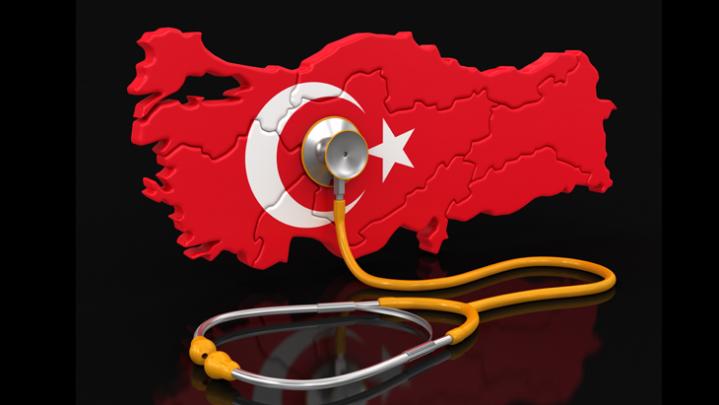
With the number of tourists to Turkey taking a plunge, Ian Youngman from IMTJ examines the political and economic factors that are affecting Turkey’s ambitions as a medical tourism destination.
In recent years, the number of tourists to Turkey went up by several million each year, until 2015. Medical tourism numbers also grew spectacularly, although some of the official figures are not entirely trustworthy. From a peak of 42 million in 2014, tourism numbers have fallen, with 2015 figures looking to be around 36 million. The trend on medical tourism is expected to show an even bigger fall as the numbers of Russians, Germans and Italians going to Turkey have fallen significantly.
Political tensions impact on travel
With the rising political tensions between Turkey and Russia, terror attacks on German tourists, terrorism in nearby countries and problems with refugees and Kurds, Turkey has many problems that will directly affect tourism and medical tourism in 2016 and 2017.
Tourism and medical tourism have been heavily dependent on Russians and Germans. According to Turkish authorities, 5.5 million Germans visited the country in 2015 and there were, until late 2015, millions of Russians.
Russian outbound numbers on tourism and medical tourism have fallen and will fall further in 2016 due to political instability, EU sanctions, falling oil prices and the value of the Rouble falling against foreign currencies.
And for Turkey there is an extra political dimension. Russian tourists have stopped coming since a Russian fighter jet was shot down by the Turkish military. In operations over Syria, Russian planes have been reported as violating Turkish air space. There’s a face-off between President Ertegun of Turkey and President Putin of Russia, where one side notches up the tension, and the other responds.
Turkey is concerned about the loss of Russian business, but increasing business from European countries had been offsetting this. Turkey is popular with German, French, Italian and Spanish tourists. The country used to be one of Germany’s most popular travel destinations, but after this year’s assault on a German tour group in Istanbul and two other attacks deliberately aimed at tourists, bookings have fallen sharply.
Falling tourism numbers from Europe
Recent European figures show that Turkey had 20% fewer tourists from France and 25% Italy in 2015 compared to 2014, and around 10% less from Germany and the UK. Numbers from all other nations fell too, apart from the Middle East where numbers increased.
Locals in the tourist trade are starting to speak out as they see that the dark clouds over the tourism sector are not the temporary blips that government hopes for.
Osman Ayık, head of the Turkish Hoteliers Federation believes that Turkey needs to improve its image abroad in order to overcome the difficulties it will face over the next two years: “Turkey must improve its image and show that it is not just another typical Middle Eastern country. Even before the downed jet crisis with Russia and the terrorist attack in Istanbul, we knew we would have a very difficult year in 2016.”
Tourism in Turkey is a huge industry with thousands of agencies, charter planes and hotels. There are many hospitals and clinics, but the figures on medical tourism are not reliable and sometimes exaggerated.
Turkey is providing credit and cash support to charter firms, and organising PR campaigns. But these are short-term solutions. Turkey’s national and international politics may damage the hopes of any medium or long-term plans on tourism and medical tourism.
Religion plays a part in destination image
Turkey is a Muslim country, and although we may understand what that does and does not mean, the frenzy against Muslims in parts of the European press, from European politicians and Donald Trump presents a problem for Turkey. As well as the mini civil war with the Kurds, hospitals in Turkey have to care for the three million Syrian refugees. Turkey has an image problem.
Turkey is seeking to balance the loss of business from Europe by targeting Iran and the Middle East. It may attract some Iranian tourists, but attracting medical tourists from Iran is harder due to Iran being a rising medical tourism destination in itself. With oil at rock bottom prices, and hopes of price rises disappearing, the Middle East is no longer a banker for either tourism or medical tourism. Government funded medical tourism will be affected by budget cuts; individuals are being hit by rising prices for fuel, food and electricity.
Impact on the hospital sector
Much is made of the quality of hospitals in Turkey but politics is impacting the hospital sector too. 21 private hospitals with links to the Gülen movement, an organisation opposed to the ruling AKP party, were refused renewals of their contract with social security insurance (SGK). The move comes amid allegations of corruption involving the AKP in the private healthcare sector.
The tourism industry is showing signs of the drop in demand. 1,300 hotels are up for sale in Antalya, an area that focused on the Russian market. The number of Russian tourists visiting Turkey’s top holiday resort town of Antalya decreased by 81%, as their numbers plummeted to 2,427 in January 2016 from 12,870 in January 2015 while the total number of tourists visiting the city in January decreased 17 % according to official figures.
The biggest challenge to Turkey’s tourism and medical tourism business may not be terrorism or the economy; how the words and actions of Turkish politicians play out on the international stage may be the determining factor.
The outlook for medical tourism in Turkey for 2016 and beyond is uncertain.




 ©2026 All rights reserved LaingBuisson