
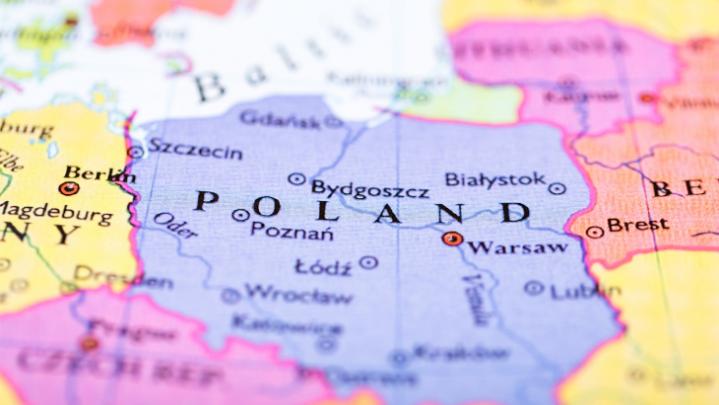
Lublin hosted the Eastern Europe Health and Medical Tourism Summit last month. It was held to promote the city and Poland as a medical travel destination, but it was also an attempt at positioning itself as coordinator for the region in delivering Eastern Europe health and medical tourism projects. Maria D. Georga, Regional Manager for Treatment Abroad and IMTJ, was at the event and shares her view.
The Eastern Europe Health and Medical Tourism Summit took place in Lublin, Poland on 12 June. The event was organised by the Strategy and Investor Relations Department of the Municipal Administration of the City of Lublin and the Lublin Medicine – Medical & Wellness Cluster.
Initial feedback suggests that the event managed to gather delegates from around 25 counties, mainly from Eastern Europe, with more than 350 attending and another 1,250 viewing through live streaming. In common with many international medical tourism events, city, hospital and clinic tours were on offer to delegates during the days and evenings of the conference, where Lublin medical care, history, tourist attractions and local gastronomy were promoted.
The Summit itself included a dedicated section on collaboration of health and medical tourism clusters across Eastern Europe. Representatives from Poland, Croatia, Latvia and Ukraine showcased the effectiveness their national clusters, all working with common goals.
There is a lot to be said for further Eastern European co-ordination when it comes to promoting the region for medical tourism. Eastern European countries have many similarities, especially the former USSR states. In addition to Russian still being widely spoken, they have a lot in common regarding culture, economic indicators and politics. This in some ways makes it easier for them to identify what it takes to develop as a ‘region’ of countries, agree a strategy and find a common way for measuring their results.
Also, the health and medical travel services within each of these countries have different features and therefore target different patient markets. Since they’re not competing for the same potential customers, there is an even stronger case for a regionally coordinated approach.
Can Lublin be the regional medical tourism coordinator?
Lublin has much to be proud of. It is a picturesque city of approximately 350,000 people, with a well preserved old town and many green spaces. It boasts a high standard of living and has, as a university city (including the Maria Curie-Sklodowska University and the Medical University of Lublin), a high proportion of professionals, academics and Polish and foreign students. Uniquely, this latter group were actively involved in the Medical Tourism Summit, who were recruited as volunteers to help with interpretation services and meeting organisation.
Perhaps it is not surprising then that Lublin was identified as one of the best cities for business in Poland by the Financial Times’ foreign direct investment intelligence service (fDi). The foreign direct investment ranking also placed Lublin second among larger Polish cities in the cost-effectiveness category.While certain infrastructure still needs upgrading (notably the national road system connecting Warsaw with Lublin), there has been substantial investment – probably of EU funds – in projects in and around Lublin. New buildings include the contemporary Lublin conference center, plus hospitals like Ikardia and several other medical facilities, which demonstrate commitment to the development of the medical sector.
The Medical Tourism Summit and Lublin’s attempts at regional coordinator also has the full backing of local authorities and patronage from various state departments including the Ministry of Health and the Ministry of Sport and Tourism. Lastly it helps to have a passionate advocate for Eastern European collaboration, who for Lublin is Marzena Strok-Sadło, a senior advisor in the Department of Strategy and Investor Relations in the City of Lublin and management board member of Lublin Medicine – Medical and Wellness Cluster.
However, like many of their neighbouring countries, there is still a need in Poland to adopt international healthcare practices. This includes the application of foreign languages in medical buildings where, although brand new, don’t seem to have been created with an international audience in mind. There is also lack of clarity on the actual numbers of medical tourists coming to Poland, which questions the actual size of this potential market (a common issue across the Eastern European region). In 2016, for example, The Polish Association of Medical Tourism claimed that there were 488,000 medical tourists to Poland however the Institute of Research and Development of Medical Tourism published a figure of 155,000 for people going Poland in search of healthcare services that year.
The future success of an Eastern European collaboration on medical tourism, and Lublin’s role in this mix, remains to be seen. In the meantime, in-depth and up to date analysis of medical tourism in both Poland and neighbouring countries can be found in the IMTJ country reports.



 ©2026 All rights reserved LaingBuisson