
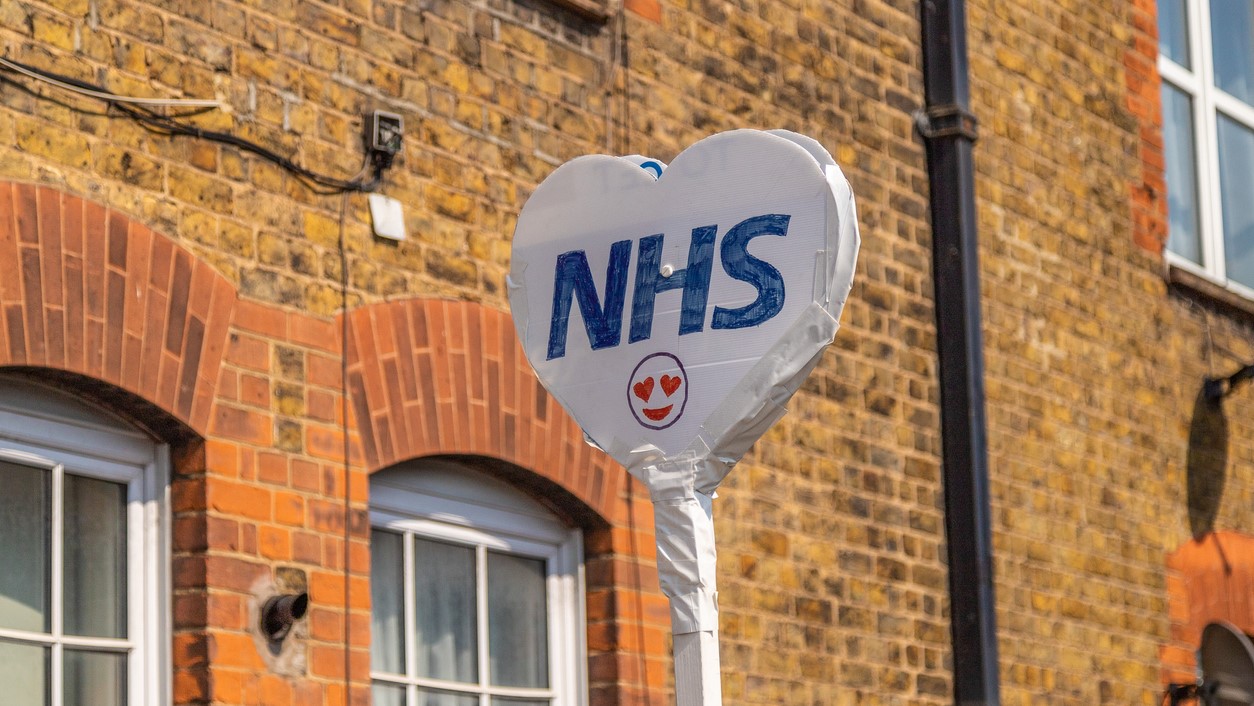
Until Brexit, the UK funded via the NHS 1,300-1,500 UK residents per year to travel to other EU member states for procedures unavailable in the UK within a medically justifiable timescale. But a new annual UK report on cross-border healthcare suggests that the NHS is not planning to pay to send people to Europe for treatment anytime soon, says Ian Youngman.
When the UK left the EU several healthcare deals vanished too. These used to cover planned and unplanned healthcare for UK residents and those temporarily in the EU or working/living there, under the EU Cross-Border Healthcare Directive.
New and planned deals
The Healthcare European Economic Area and Switzerland Arrangements Act 2019 (HEEASAA) now provides a legal framework to implement comprehensive reciprocal healthcare agreements with countries in the EEA and with Switzerland following the UK’s departure from the European Union.
The first ever report under this new framework (the Annual report on payments made under the Healthcare (EEA and Switzerland Arrangements) Act 2019) covers the period between the end of the EU exit transition period on 31 December 2020 and the end of the financial year on 31 March 2021.
Very limited expenditure took place under the 2019 act due to the lag in receiving claims from member states.
UK politicians have stated the intention of developing reciprocal healthcare agreements with other countries. It is recognised that reciprocal deals support UK residents to access necessary and emergency healthcare when they travel abroad and can facilitate cooperation on planned treatment and other areas of healthcare policy.
The deals also support tourism and short-term business travel, and can particularly benefit those with long-term health conditions. In the past, the most frequently used element of reciprocal healthcare for UK residents, and the most familiar, is access to necessary unplanned healthcare in other countries.
Following the UK’s departure from the EU European Union, the UK government reached an agreement with the EU to ensure that UK residents continued to benefit from reciprocal healthcare arrangements when in the EU. It implemented separation agreements with the EU, Switzerland, and the EEA EFTA states (Norway, Iceland and Liechtenstein).
These agreements ensured that there was no cliff-edge for citizens’ rights, including reciprocal healthcare rights, when the UK departed from the EU by protecting those with residence rights.
The government subsequently agreed further comprehensive arrangements with the EU and Switzerland that provide reciprocal healthcare coverage to those travelling to the EU and Switzerland. This means continued healthcare support for UK residents when they travel or move to the EU or Switzerland.
The UK negotiated a memorandum of understanding in 2020 with Ireland on reciprocal healthcare to ensure continuity of most elements of reciprocal healthcare in the event of no negotiated outcome with the European Union on a future relationship. It specifically recognises the unique relationship of the UK with Ireland and broader common travel area arrangements.
The UK is currently negotiating a further agreement with the EEA EFTA states of Norway, Iceland and Liechtenstein. UK nationals can use their passports to access necessary healthcare in Norway in the meantime.
The UK has negotiated and implemented six agreements with countries and blocs in Europe and hopes to reach further agreements with countries in Europe and outside of Europe.
Where the UK or EU member state is responsible for the healthcare of an individual, they will be entitled to reciprocal healthcare cover. This includes certain categories of cross-border workers and state pensioners who retire to the EU.
In summary, the agreements in place during the report period cover:
- The healthcare costs of UK-insured state pensioners and their dependants living in the EEA and Switzerland 201,000 in total, known as S1 arrangements.
- Individuals exporting benefits to the EEA and Switzerland (and their dependants) whose healthcare is funded via the S1 form – 7,200 in total.
- 42,000 workers from the UK who are on a temporary posting in the EU and access healthcare using UK issued health cards.
- There are also 2,100 S1 certificates issued to workers or their dependants to access healthcare in the EEA and Switzerland.
Medical tourism
Until Brexit the UK funded via the NHS 1,300 to 1,500 UK residents per year to travel overseas to receive planned treatment in member states such as for procedures unavailable in the UK within a medically justifiable timescale or returning home to give birth. These are known as S2 provisions.
Reimbursement
Prior to EU exit, the UK was obliged to reimburse healthcare costs for which it was liable. Treatment in the EEA and Switzerland incurred since 31 December 2020, for which the UK is liable, is now mainly reimbursable.
For the reporting period of this report, the UK has been responsible for funding those covered by the separation agreements and the social security coordination protocol to the UK-EU trade and cooperation agreement (including the MOU with Ireland).
The UK-Switzerland social security convention came into force in November 2021 and therefore no payments have been made under this agreement during this reporting period.
Different reimbursement mechanisms are in place for the different reciprocal healthcare provisions and vary by member states.
For necessary healthcare, the reciprocal healthcare arrangements enable the UK to charge EEA and Swiss states based on the actual costs for the use of NHS services or to agree an alternative form of charging, such as cost-waiver agreements (where each country underwrites the healthcare costs of the services used by people of the other state) or formula agreements (where a model is agreed between the UK and a member state based on factors such as travel numbers).
The UK has formula agreements in place to estimate the value of NHS services used in the UK by temporary visitors from Spain, France, Portugal, Belgium, Sweden and Ireland, and the UK has opted to enter into cost waiver agreements with some of the smaller member states, such as Norway and Malta, where the total flow of people between the UK and these states is broadly similar in both directions.
The UK pays the actual costs for all those receiving planned treatment (S2).
Pensioner healthcare (S1) is charged at an average cost in Cyprus, Portugal, Spain, Ireland and Sweden, and actual cost (or through the waiver) for all other member states and Switzerland. Workers eligible for an S1 are all charged at actual cost.
So how much has the UK paid?
In terms of the payments, all EEA healthcare payments are made in arrears, usually between 1-3 years after the event.
The complex cross border payment process takes at least one year.
Routine payments for treatment are unlikely to begin until early 2022- one year after the agreement came into force.
The only payments made for the period between 31 December 2020 and 31 March 2021 were for discretionary planned treatment care. These payments are made outside of the regular payments process and are therefore paid in a shorter time frame.
Payments for discretionary planned treatment are made to support the healthcare needs of British residents when they are abroad in circumstances that fall outside of a reciprocal healthcare agreement. They are most likely to be used when the refusal to fund healthcare treatment would result in unjustifiably harsh consequences for the individual.
The UK payments are as follows:
- Necessary healthcare: £0
- Pensioner and worker healthcare £0
- Routine planned treatment £0
- Discretionary planned treatment £9,251.89
In conclusion from this data, even allowing for time delays, the NHS is not planning to pay to send people to Europe for treatment anytime soon.






 ©2026 All rights reserved LaingBuisson