
Arrangements for the provision of specific cross border healthcare services between the UK and the Republic of Ireland should not be affected by Brexit…in theory. Ian Youngman looks at what is currently certain and warns that some healthcare decisions involving the UK and other EU member states are changing daily. The impact on medical travel remains impossible to predict.
People living in Northern Ireland and the Republic of Ireland will have many practical questions about how things may change for them after Brexit.
Whether there is a Brexit deal, a no deal Brexit, no Brexit or a delayed Brexit, patients in the Republic of Ireland, Northern Ireland, or elsewhere in the UK will still be able to get cross-border healthcare.
Arrangements for the provision of specific cross-border healthcare services made between the Department of Health in Northern Ireland and the Department of Health in Dublin (such as the Paediatric Congenital Heart Service or the North West Cancer Centre) will not be affected by the UK’s departure, as they are not based on EU legislation.
The CTA – a different cross border relationship
The relationship between the UK and Ireland is different to the relationship between the UK and anywhere else in the EU because of the Common Travel Area (CTA).
The CTA is a long-standing arrangement between the UK, the Crown Dependencies (Bailiwick of Jersey; Bailiwick of Guernsey; Isle of Man) and Ireland. It recognises the special status that British citizens in Ireland and Irish citizens in the UK have under each country’s national law, and is not based on EU membership. Both Governments have committed to taking steps to ensure that this continues after the UK leaves the EU. Other nationalities travelling within the CTA remain subject to national immigration requirements.
The CTA establishes cooperation between respective immigration authorities to enable British and Irish citizens to move freely between, and reside in, these islands and enjoy additional privileges in both jurisdictions, without the need of visas, or residence or employment permits. These additional privileges include the right to work, study and vote in certain elections, as well as to access social welfare benefits and health services.
British and Irish citizens have the right to access healthcare
in either state. When visiting they also have the right to access needs-arising healthcare during their stay. Both Governments have committed to taking steps to ensure that this healthcare access will continue after the UK leaves the EU.
Brexit and its impact on EU Cross Border Healthcare
At present a patient can freely travel from the UK to Ireland or in the other direction, under EU Cross Border Healthcare rules, but whether this will continue is still unclear.
The current official advice from UK, Irish and EU bodies is summarised below. It is still unknown what will or will not apply in practice at borders (and no one yet knows what the border will be between the Republic of Ireland, Northern Ireland and the rest of the UK) or at airports, ports, rail stations and hospitals, and with national and local authorities.
European Health Insurance Cards
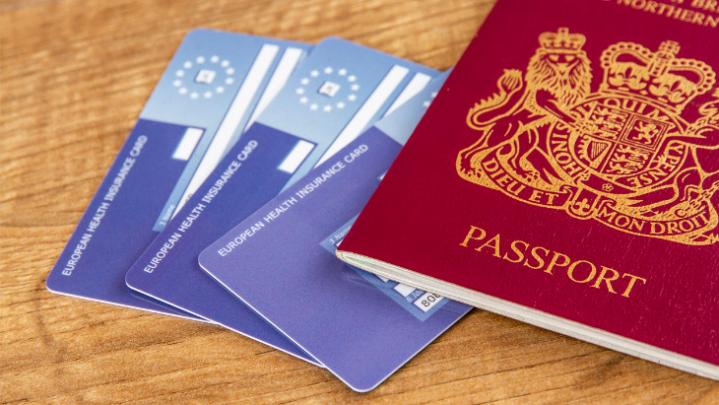
UK based travellers who intend to use their European Health Insurance Card (EHIC) must check what the arrangement is with the specific country they are visiting as the card may not be valid. This advice also applies to students studying in the EU. This information is fluid and depends partly on the overall deal between the UK and the EU, and partly on specific deals between the UK and individual European countries. People living in the Republic of Ireland can use EHIC as before.
European Cross Border Healthcare
People living in the Republic of Ireland can use EU cross-border healthcare as before, but the UK is a grey area. For UK based patients who intend to use the EU cross-border healthcare rules to get treatment outside the UK, they must check what the arrangement is with the specific country they are planning to go to. This information changes daily however and depends partly on the overall deal between the UK and the EU and partly on specific deals between the UK and individual European countries. Some of these deals remain contingent on negotiations.
Protecting UK nationals living in the EU and EU nationals in the UK
Other than in the Republic of Ireland, the situation for EU nationals living in the UK and UK nationals living in the EU is partly dependent on deals between the UK and EU and partly dependent on deals with specific countries. Not only is the situation changing daily but many country deals are only agreed in principle and not in detail, while many only apply to UK nationals if the UK reciprocates, while others depend on events or specific scenarios.
Travel insurance for UK citizens advised
Until further agreements are reached between the UK and individual EU member states, the government advises UK citizens to ensure they are fully prepared for any unexpected healthcare requirements overseas by buying travel insurance. Travel insurance does not usually cover planned treatment overseas.
Healthcare for UK residents visiting the EU, EFTA and Switzerland
The UK government has proposed to EU Member States and EFTA states (Norway, Iceland, Liechtenstein and Switzerland) to maintain the existing healthcare arrangements in a no-deal scenario. This offer will apply until December 2020 with the aim of minimising disruption to healthcare provision for UK nationals and EU and EFTA citizens.
This means that the UK government will continue to pay for healthcare costs for current or former UK residents who are living, working in or visiting the EU. The government has stated it wants to work with EU partners to reach such agreements.
But if countries do not agree to extend the existing healthcare arrangements, access to healthcare when visiting the EU and EFTA may change and become like arrangements in the rest of the world. It is worth bearing in mind that if a traveller becomes medically unwell, or requires healthcare overseas, the UK government does not routinely cover the costs of bringing people back to the UK.
Brexit and EU medical travel
Most UK citizens travelling to other countries do not use the EU Cross Border Healthcare rules to do so, as they pay privately. So, on the face of it, the British could still travel for treatment. And with the NHS losing many EU employees, waiting lists may lengthen which could encourage more people to look abroad for faster treatment.
But if travel to Europe becomes more complex with new rules, visas, delays in border control, increased costs of travel, industrial action or other factors that may come into play, then it is equally likely that fewer British will travel abroad in the future. Given the current political uncertainty and mistrust in the decision making process, there could be dip in travel to the EU in the short term.
As for the effect on inbound medical tourists to the UK from Europe, or elsewhere, the possible variations at this current stage of Brexit remain endless.
What’s happening in global medical travel? Great insight at a lower price
The IMTJ Medical Travel and Tourism Global Market Report gives you the insight you need to guide your international patient strategy. It tells you what is happening worldwide, and a provides a realistic assessment of future trends. Take advantage of our Spring special offer (expiring on 15th April 2019) and benefit from a 20% discount on a package of two IMTJ publications: the IMTJ Medical Travel and Tourism Global Market Report, and a one year IMTJ Country Profile subscription.




 ©2026 All rights reserved LaingBuisson